Case Study: Rapid Pilot-to-Production Transition for a Marine Mechanism Integrated Assembly
KL Engineering, Inc. was approached by a customer who needed to rapidly scale from a single in-house lab proof-of-concept to production-ready, field-shippable integrated assemblies for a marine mechanism. The assemblies had to be reliable in a salt-spray environment with wetting cycles and rotary motion occurring within sealed and semi-sealed subsystems. However, the transition effort faced practical constraints: the initial sample size was small, and the customer needed to be confident that the performance validated in the lab could be replicated in production and verified during offshore testing.
This created two core challenges. First, the integrated design had to be manufactured with sufficient repeatability to preserve functional performance – especially at critical fit interfaces such as bearing housing features and other alignment-sensitive interfaces – so that assembly-to-assembly tolerance variation did not erode the mechanism’s operation. Second, the customer needed robust long-term marine reliability without relying on extensive re-prototyping, which required a system-level approach to materials, coatings, hardware selection, and isolation layers to prevent corrosion and mitigate galvanic interactions between adjacent components.
In addition, because essentially no production verification documentation or characterization/diagnostic framework existed for this specific electromechanical assembly, the customer required a manufacturable and testable production package: consistent assembly processes, assembly-level diagnostic testing to detect potential issues before shipment, and clear documentation artifacts that would store and communicate test outcomes for each delivered assembly under a single purchase-order model.
Program Background and Functional Scope:
The integrated assembly consisted of a multi-part mechanical substructure, electromechanical and commercial components (including stepper motors), and a sealed electrical enclosure. The mechanical portion incorporated bearing housings as key structural and alignment features. In the delivered assembly configuration, four bearing housings were included, along with multiple additional machined parts and commercial components.
The customer’s internal proof of concept demonstrated feasibility at both conceptual and functional levels (i.e., the mechanism operated as intended under lab conditions). The customer then needed to launch pilot production to support offshore testing overseas quickly, where assemblies would operate in a marine environment that was not fully submerged but would experience:
KL Engineering’s role was to transform the conceptual design into a scalable, repeatable manufacturing and verification process – so that performance observed in the lab could be replicated reliably at production scale in the field.
The central challenge was to transform a functional but non-scalable prototype into a manufacturable,
repeatable, and cost-efficient product without sacrificing performance. At the same time, the design had
to meet demanding requirements for:
In short, the customer required a production-ready design that could bridge the gap between concept
and scalable manufacturing, while minimizing complexity and risk on their end.
The program had several tightly coupled objectives:
1.) Bearing housing and interface design for manufacturing revisions
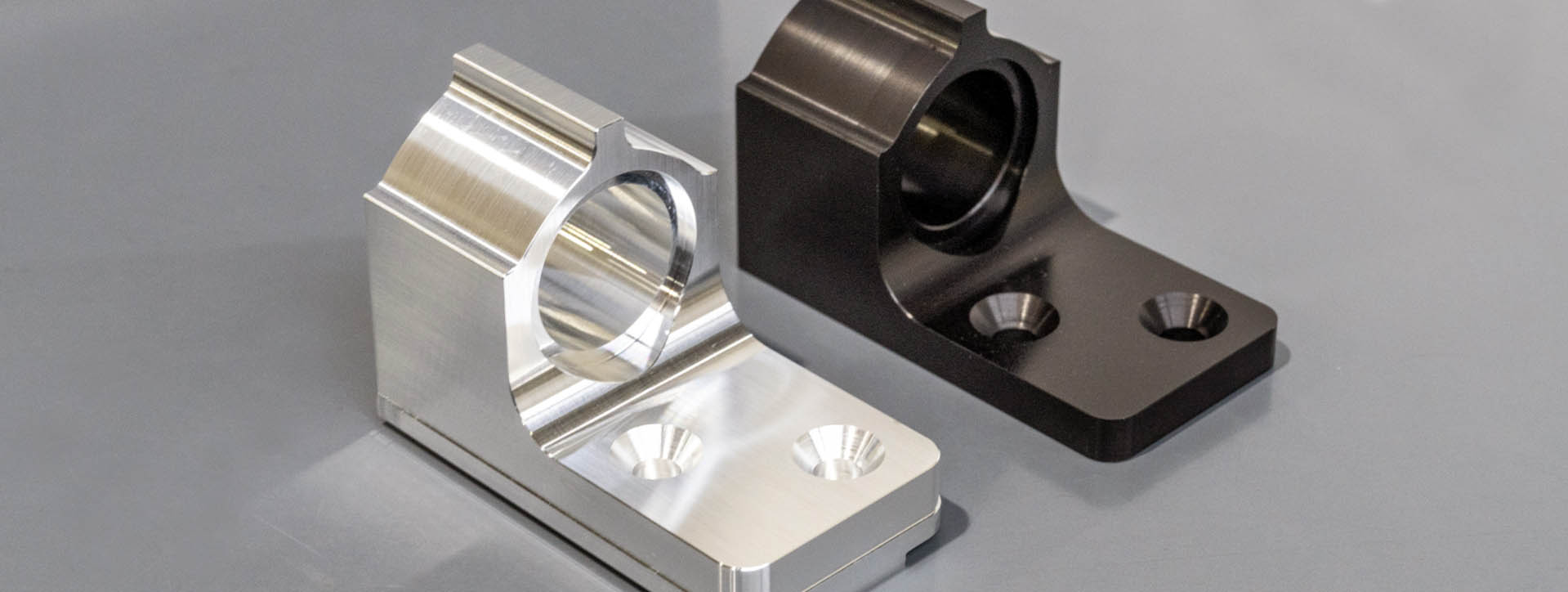
Although the bearing housing was a component of a larger integrated assembly, it served as a critical functional interface for alignment and load transfer in the mechanism. KL Engineering and the customer’s engineering team focused on targeted revisions to improve manufacturing repeatability and reduce tolerance stack-up risk.
Key manufacturing-oriented actions included:
The intent was not merely to “make the part,” but to ensure that the part’s functional interfaces would support repeatable performance across an assembly-level test campaign.
2.) Integrated marine corrosion control: materials, coatings, and isolation strategy
A principal challenge of the program was marine environmental survivability, not primarily in machining difficulty, but in ensuring the long-term reliability of the assembled system under salt-spray exposure.
KL Engineering coordinated corrosion mitigation across the full assembly system stack, including:
Since the program transitioned rapidly from a lab prototype to pilot production, KL Engineering and the customer had limited opportunities to validate every combination through extensive experimental prototype builds. Instead, they pursued a disciplined, upfront selection strategy, leveraging established material compatibility principles and implementing an integrated “togetherness” approach: adjacent materials were evaluated as an assembly system rather than as isolated parts.
3.) System-level verification: diagnostic tests and characterization fixtures
Given the complexity of the integrated mechanism – electronics, motors, rotary motion, and sealed electrical enclosure – the program required diagnostic readiness at the assembly level. Critically, documentation and test-definition artifacts did not exist before the transition effort, so we had to create a verification backbone for production shipments.
KL Engineering developed:
The diagnostic strategy addressed the reality that the customer was relying on lab-proven behavior but needed confidence that production builds would match that performance in the marine environment.
Manufacturing and Project Execution Model
Collaborative pilot-to-production cadence
The customer had an operational presence close enough to KL Engineering that customer representatives could be on-site during key build stages. This enabled:
This on-site collaboration was instrumental in closing the gap between conceptual prototype design and production-ready execution under time constraints tied to overseas offshore testing.
Single purchase order integrated delivery
Rather than delivering parts in a fragmented supply model, the customer issued a purchase order for completed integrated assemblies. KL Engineering, therefore, functioned as a comprehensive manufacturing and verification partner – requiring internal process maturity across machining integration, component kitting, assembly, testing, and documentation.
By combining manufacturability revisions (including bearing housing interface and mounting changes), system-level marine corrosion control (materials, coatings, gasketing, and isolation layers), and newly developed characterization fixtures and diagnostic tests, KL Engineering enabled the customer to: